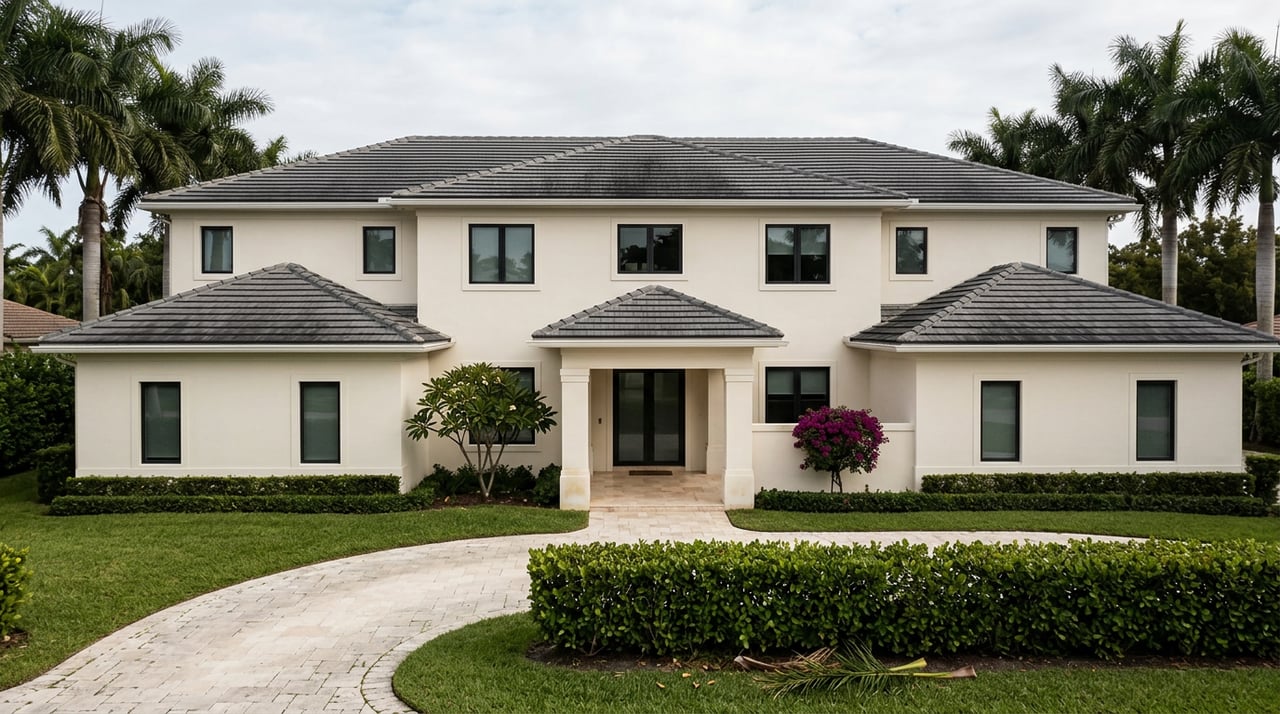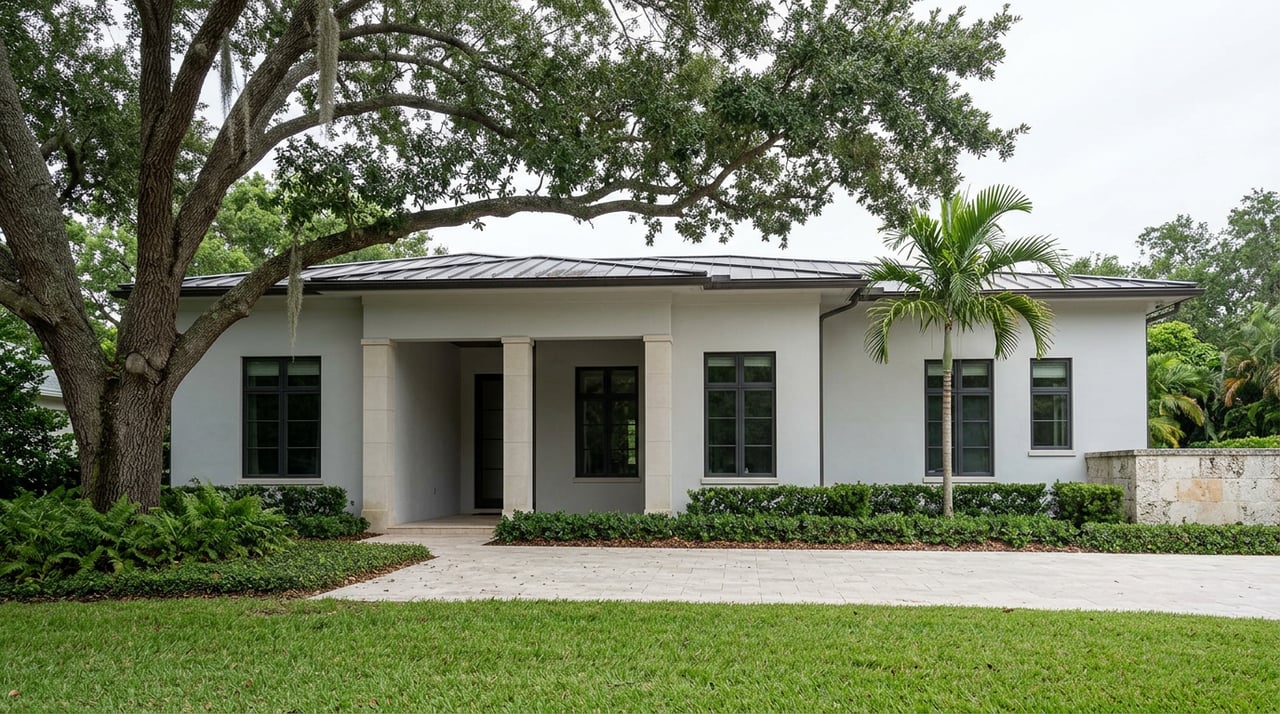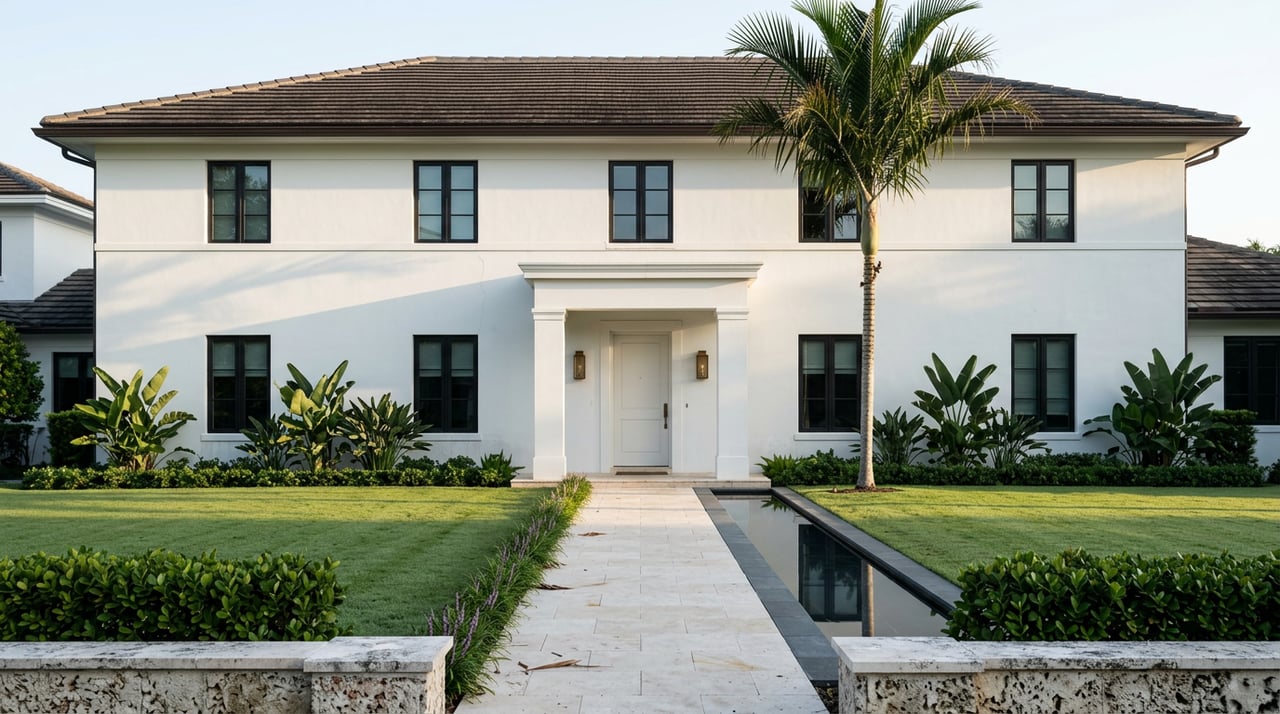
This summer, a family trust sold a house on West Broadview Drive in Bay Harbor Islands for $18 million. The buyer, an affiliate of David Burstyn's Winston Capital Management, has no plans to live in it. The house will come down. In its place, the developer intends to build a spec home of roughly 12,000 square feet on the nearly half-acre, north-facing parcel.
Run the numbers on that sale and something strange appears. The same property changed hands for $12.3 million in 2023. Three years, no renovation, and the price climbed by nearly $6 million on a lot that will be demolished. That is not a story about a house getting more valuable. It is a story about what the land underneath it is actually being priced to allow.
The Math That Doesn't Compare to the House Standing on It
The deal closed as an off-market transaction, arranged privately rather than through the open listing process. Priscilla Burstyn of the Baron Agency represented the buyer. Zalmy Shapiro and Joel Lusky of the Brokerage South Florida, alongside Jordan Karp of Jordan Karp LLC, represented the seller, a trust whose sale agreement was signed by trustee Noah Burton and recorded in May. The closing price works out to about $914 per square foot of land, a figure that has nothing to do with square footage of living space, because the existing structure isn't the asset being purchased.
What the buyer is actually paying for is the right to build. On a lot with that much water frontage, in a town where new construction has already cleared $2,700 a square foot, the arithmetic of a spec build starts to make sense even at $18 million for dirt. Earlier this year, developer Menachem Kranz sold an 8,000-square-foot new-construction home a few doors down at 9640 West Broadview Drive for $21.8 million, a record on a price-per-square-foot basis for the town, and a property that ONE Sotheby's International Realty represented in the transaction. A 2024 sale at 9520 West Broadview Drive, an eight-bedroom, ten-bathroom estate, closed at just under $22 million and still stands as the town's priciest single-family sale. Those two numbers are the ceiling the land buyer is underwriting against.
Two Records, Three Years Apart, on the Same Street
| Address | Year | Price | Price per sq ft | What sold |
|---|---|---|---|---|
| 10312 West Broadview Dr | 2023 | $12.3 million | — | Existing house on the lot |
| 10312 West Broadview Dr | 2026 | $18 million | $914 (land basis) | Same lot, off-market, to be redeveloped |
| 9640 West Broadview Dr | 2026 | $21.8 million | $2,700 | New-construction finished home |
| 9520 West Broadview Dr | 2024 | ~$22 million | — | Existing eight-bed, ten-bath estate |
The pattern across these four transactions is not that Bay Harbor Islands got more expensive in some generic sense. It's that two different pricing systems are operating on the same street, and the $18 million sale sits at the seam between them.
One of the current listings on the street describes itself as the last remaining vacant lot on West Broadview, a detail that matters more than it sounds like it should. When a street runs out of unimproved parcels, every remaining teardown effectively becomes vacant land the moment a buyer decides to demolish, and it prices accordingly.
The Entitlement Is the Product
Bay Harbor Islands is a town of just under half a square mile, split by design since its founding into two islands with different rules. The West Island has always been reserved for single-family homes. The town's zoning code sets minimum street frontage for building sites on the West Island at 75 feet for waterfront parcels and no less than 80 feet for all others, a threshold written into the ordinance decades ago and unchanged since.
"On the West Island, waterfront building sites shall have a minimum of 75 feet in street frontage, and all other building sites shall have no less than 80 feet in street frontage."
That single line of code is doing more economic work than any market report. It means the town cannot subdivide its way to more inventory. A developer cannot split a West Broadview lot into two smaller, cheaper parcels the way a builder might in a less restricted subdivision. The number of buildable sites on the West Island is fixed by an ordinance, not by demand, and every new construction sale that sets a per-square-foot record on the finished product pulls the entitlement value of the remaining raw parcels upward with it. New construction on the West Island also passes through the town's Design Review Board, which evaluates exterior design, scale, and site planning before a permit clears, adding another layer that keeps the finished product scarce and consistent in quality, which in turn keeps the ceiling price defensible.
The buyer of a teardown on this street isn't comparing the $18 million price to what the existing house would rent for or what a similar older home nearby last sold for. They're comparing it to what a 12,000-square-foot new build could command against a $2,700-per-square-foot benchmark already set two doors away, minus the cost of construction and the carrying period.
A Few Hundred Feet Away, the Opposite Market
Walk from West Broadview Drive across the causeway to the East Island and the pricing logic flips. The East Island is zoned for multifamily housing rather than single-family lots, which means condominium buildings, not scarce land, drive that side of town. As of the fourth quarter of 2025, the most recent Miami Realtors condo and townhome report showed Bay Harbor Islands carrying 20.8 months of supply, well above Miami-Dade County's 13.2 months for the same period. Listings in that report took a median of 161 days to go under contract, and sellers were closing at about 87.6 percent of original list price on average, even as the median sale price rose 25.8 percent year over year.
Those numbers describe a market where prices are climbing on paper while individual sellers still have to work to get a deal done, a very different dynamic from a land seller receiving an unsolicited off-market offer $6 million above their last sale price. Redfin's closed-sale window ending in April 2026 painted a similar picture for the town's broader single-family segment, describing the market as not very competitive, with a median sale price of $662,158, a median of $454 per square foot, and 157 average days on market, figures that reflect legacy homes rather than the West Broadview transactions above.
The reason both things are true in the same 0.4-square-mile town comes back to the same zoning split. The East Island can add supply, and developers have, with three luxury apartment buildings from Clara Homes, Continuum Company's two-phase La Baia project, and Onda Residences all adding units to a market that only has so many buyers who want a condominium in this specific corridor. The West Island cannot add supply at all, so every transaction on a scarce lot behaves less like a home sale and more like an auction for one of a finite number of remaining entitlements.
What This Means If You're Comparing the Two Sides
For a buyer evaluating land or a teardown on the West Island, the relevant comparison set isn't nearby existing homes. It's the per-square-foot ceiling that recent new construction has established, because that ceiling is what a developer is underwriting against when they bid on the dirt. A lot that looks expensive against its own sale history can still be underpriced against what a finished 8,000 to 12,000-square-foot home on that frontage could fetch.
For a buyer looking at the East Island's condominium stock, the months of supply and time-to-contract figures suggest more room to negotiate than headline price growth would imply. A rising median doesn't mean every seller is holding firm, and a buyer who understands the difference between the two islands' underlying mechanics is negotiating from a stronger position than one working off a single town-wide number.
FAQ
Does the $914-per-square-foot land price include the existing house on the lot? No. The figure reflects the land basis of the transaction. The developer plans to demolish the existing structure and build new, so the price paid has no relationship to the current improvement's condition or size.
Why can't Bay Harbor Islands simply create more buildable West Island lots? The town's zoning code sets minimum street frontage requirements, 75 feet for waterfront sites and 80 feet for others, that prevent further subdivision of existing parcels. Combined with the West Island's permanent single-family designation, the number of buildable sites is effectively fixed.
Is the East Island condo market's supply overhang likely to persist? The fourth-quarter 2025 data showing 20.8 months of supply reflects a snapshot in time, and buildings like La Baia and Onda Residences have already reached full or near-full sellout since breaking ground. Whether the overhang narrows depends on how quickly the remaining pipeline absorbs, which is worth revisiting as newer reports become available.
Land economics on a two-island town this small reward the kind of granular, street-level read that a headline median can't provide. If you're weighing a West Island rebuild against an East Island condominium, or trying to figure out what a specific lot is actually worth once the zoning constraints are factored in, Andrea Diaz can walk through the comparable set with you, building by building and lot by lot.